Partnerships Are Creating Possibility in Spartanburg

Lilly Simmons • October 23, 2025

Bridgeway Village Resumes!

Exciting progress is happening at Bridgeway Village, Spartanburg’s first tiny home community for women and families experiencing homelessness and housing instability. Construction has officially restarted after the property transitioned from First Baptist Spartanburg to Homes of Hope, marking a major milestone in this innovative collaboration. Each partner in this collaboration plays a distinct and vital role in bringing Bridgeway Village to life. First Baptist Spartanburg initiated the project and invested $1.6 million to get the homes “in the dry,” ensuring the foundation for future progress. The City of Spartanburg is funding the remaining construction, helping complete the vision of creating safe, sustainable housing for women and families. Homes of Hope now owns Bridgeway Village, following First Baptist’s generous donation of the property, and will oversee the development and maintenance of the site. A Place to Call Home will lease the property from Homes of Hope and manage all day-to-day operations, including the programmatic and wraparound service components. This model demonstrates the strength of collective action and cross-sector collaboration.  


Bridgeway Village will feature 18 tiny homes, nine one-bedroom cottages for single adult women, and nine two-bedroom cottages for families of up to four people. Residents will participate in individualized plans that include housing navigation, life-skills coaching, benefits access, emotional support, financial education, and job training. Accountability measures such as employment, savings, and regular case-management check-ins are built in to help residents sustain progress toward permanent housing. 


This project underscores the power of partnership and collaboration. As Hannah Jarrett, Director of A Place to Call Home, emphasizes: 


“No single organization can solve homelessness alone. Bridgeway Village represents what’s possible when partners come together to address a critical gap in our community’s housing continuum. This partnership is about more than building homes—it’s about creating stability and opportunity for women and families who have been left without many options. Together, we’re addressing urgent needs with long-term solutions.” 


Homes of Hope President and CEO Don Oglesby adds: 


“We are super excited about this new project and our new partners. Transformation comes in many forms, and this project represents one that we believe will prove incredibly impactful.” 


Deputy City Manager Mitch Kennedy highlights the city’s role:  


“Bridgeway Village is an amazing example of community partners coming together to creatively address a critical need in Spartanburg. We are proud to be a part of this innovative solution to assist some of our city’s most vulnerable and underserved residents.” 


First Baptist Spartanburg also shared their enthusiasm: 


“First Baptist loves Spartanburg. We are grateful for the generosity of the FBS church family in donating these homes and for A Place to Call Home and Homes of Hope for opening and operating Bridgeway Village. As a faith community we desire that everyone would have a personal relationship with God and experience personal and spiritual transformation. We are looking forward to hearing many stories of lives that are renewed and changed through this partnership.” — Dr. Mike Harder, Senior Pastor 


Bridgeway Village was designed with intentionality to serve women and small families because the need is both urgent and profound. In 2023, more than 13,700 children in South Carolina experienced homelessness, including 1,118 in Spartanburg County alone. Despite the scale of this issue, resources for women and families remain extremely limited. Spartanburg has very few emergency shelter beds available for women and essentially none dedicated to children. Many existing housing and shelter programs are not equipped to serve women with children, leaving families with few options for safe, stable housing. At the same time, 84% of single mothers in Spartanburg County live below the ALICE threshold, meaning they cannot afford basic necessities such as housing, childcare, transportation, and food. Bridgeway Village addresses this critical gap by creating a place where women and small families can remain together while accessing the stability, services, and support needed to rebuild their lives. 


Construction is moving forward, and Bridgeway Village is expected to open in March of 2026. From the very beginning, community members have played an important role in bringing this project to life. Volunteers have helped organize and relocate donations to prepare the site for future residents, with another volunteer day planned for early November to take inventory and ready the units for outfitting. This hands-on participation reflects the shared commitment that has driven Bridgeway Village from the start and demonstrates how collaboration between nonprofits, faith communities, public agencies, and residents can create real solutions to homelessness in Spartanburg. 


If you would like to learn more about Bridgeway Village, please reach out to Deandra Comer at dcomer@aptchspartanburg.org 
June 23, 2026
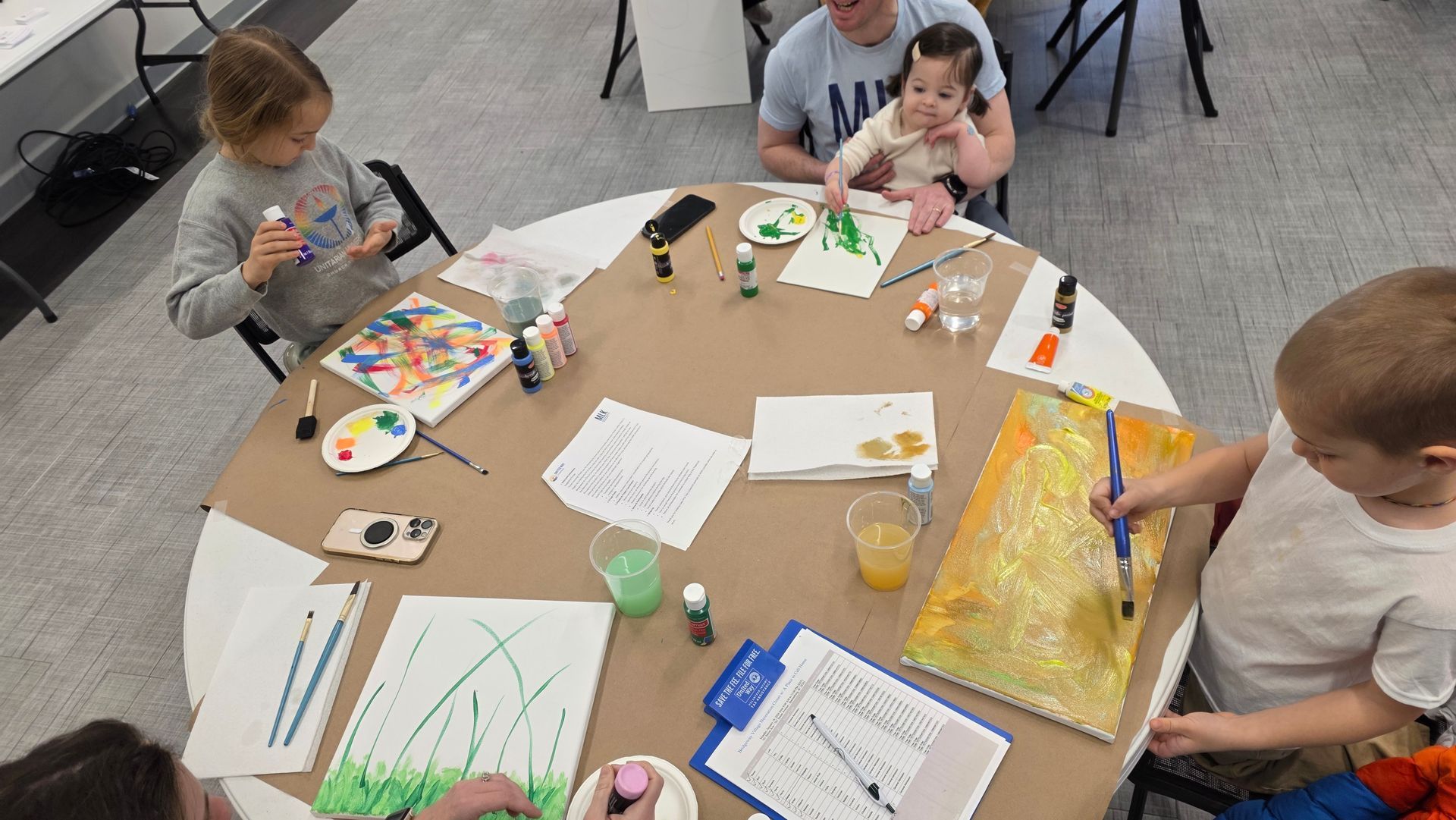
Homelessness doesn't always look the way people expect. Many children and families experience "hidden homelessness" — living in motels, doubled up with relatives, or moving from place to place without stability. Because their struggles are less visible, their needs are often overlooked. Video: https://www.youtube.com/watch?v=j9QaBzm_Lc0 Before A Way Home opened its doors, there was no family shelter within 50 miles of Spartanburg. Families in crisis had nowhere local to turn, despite significant need across Spartanburg County: Approximately 3,000 people experience homelessness on any given night. An estimated 1,200–1,500 children experience homelessness in the county each year. 84% of single-mother households live below the ALICE Threshold . For children, housing instability means disrupted schooling, lost friendships, health challenges, and an erosion of the sense of safety every child deserves. A Way Home exists to address this need. Our Approach Three years ago, Spartanburg County had lost both of its family shelters. When community leaders presented a countywide plan to address housing and homelessness through A Place to Call Home, local congregations stepped forward to bring family shelter back. Today, 22 congregations maintain a rotational shelter that opens its doors to families each week. At night, families sleep, shower, and share meals in welcoming church spaces. During the day, they spend time at the Day Center, where they have access to laundry, case management, job resources, and transportation — and simply a place to be families and kids. Every Sunday, they move to a new host congregation, creating a network of care that extends far beyond any single building. A Place to Call Home staff provides individualized case management, helping families navigate housing applications, employment, benefits, and childcare. Participants meet weekly with their case manager to work toward their goals and stability. The program runs up to 90 days, with extensions based on progress. The goal is always permanent housing and long-term stability.Over the past year, one of our neighbors, who we will call James, moved into permanent housing after more than 20 years of living on the streets in downtown Spartanburg. He has now been stably housed since Thanksgiving. One Year of Impact 70 families resourced by A Way Home case managers 18 families sheltered with no other housing option 10 families in permanent, sustainable housing 500+ volunteers contributing over $360,000 in in-kind hours What those numbers look like in practice: “You reminded us that love is still alive and community still matters. You reminded us that faith is not only expressed through words but through action, patience and compassion. You showed us the heart of Christ in everything you did.” Those words came from a family who wrote to their host congregation after leaving the program — a reminder that the generosity of our partner churches leaves a lasting mark. One family arrived at A Way Home with nothing but the clothes on their backs. On their first night, they were welcomed by volunteers at the Unitarian Universalist Church of Spartanburg. Weeks later, when the rotation brought them back to the same congregation, the children ran ahead to greet the volunteers who had first made them feel safe. For those kids, it wasn’t just a shelter. It was a place where they were known and felt safe. The Partnership That Makes It Work A Way Home is not one organization doing this work alone. It is a collaboration. A Place to Call Home A Place to Call Home provides the professional backbone of the program. APTCH staff conduct family intakes, provide ongoing case management, and staff the Day Center Monday through Friday. They coordinate transportation, connect families to resources, and serve as the consistent thread of support throughout each family's stay. The Faith Initiative to End Child Poverty The Faith Initiative to End Child Poverty mobilizes Spartanburg's faith community to respond to child and family homelessness. The Faith Initiative recruits and coordinates partner churches, manages Sunday Day Center volunteers, and ensures that each week of hosting is covered and supported. Host Churches Host churches are the heartbeat of A Way Home. Each week, a congregation opens its space, preparing rooms, serving meals morning and evening, and providing overnight volunteers who ensure families are safe throughout the night. Hosting is a significant commitment, and the churches that step into this role do so with extraordinary generosity. Support Churches Support churches strengthen the work by providing additional volunteers, helping with meal preparation, and offering practical assistance to host congregations. This model means that churches of any size can participate in a meaningful way, because the entire network is stronger together. Every church in this network, whether hosting families for a full week or simply showing up to help serve a meal, is an essential part of why A Way Home works. A Way Home Churches: Bethel United Methodist Church Central United Methodist Church Church of the Nazarene Crossroads Baptist Church Fernwood Baptist Church First Presbyterian Church Grace Presbyterian Church Hub City Church Jesus Our Risen Savior New Beginnings United Methodist Church Second Presbyterian Church Silver Hill United Methodist Church St. James United Methodist Church St. John's Lutheran Church St. Margaret's Episcopal Church St. Matthew's Episcopal Church St. Paul the Apostle Catholic Church St. Paul United Methodist Church Trinity United Methodist Church Unitarian Universalist Church of Spartanburg Westminster Presbyterian Church Get Involved A Way Home runs because people choose to show up. Here are some ways you or your congregation can be part of this work: Volunteer at the Day Center Shifts are available on Sunday from 7 AM to 4:45 PM (broken into 3-hour slots) and on weekday afternoons. No special skills required, just a willingness to be present. A Way Home | A Place to Call Home | Spartanburg, SC Host or Support Families Congregations of any size can participate, whether by hosting families for a week or supporting a host church with meals and volunteers. Reach out to Sally Dyer at sbdyer@gmail.com to learn more about what's involved. Give Every contribution directly supports shelter, case management, and the resources families need to move toward permanent housing. Give online at ignite.stratuslive.com , or make a check out to United Way of the Piedmont with "APTCH – A Way Home" in the memo, mailed to P.O. Box 7300, Spartanburg, SC 29304. Donate in-kind items: twin-sized blankets, pillows, household cleaning supplies, and laundry detergent are always needed. Shop directly from the Amazon Wish List . To learn more or get connected, contact: · Deandra Comer, APTCH's Shelter and Housing Programs Manager, at dcomer@aptchspartanburg.org · Sally Dyer, Faith Initiative A Way Home Project Leader, at sbdyer@gmail.com Thank You A Way Home exists because of people who believe that every family deserves a safe place to land and who are willing to do the work of making that real. To our 500+ volunteers who contributed over $360,000 in in-kind volunteer hours: thank you. This impact belongs to all of you.
By Lilly Simmons May 4, 2026
What One Year Made Possible.
May 4, 2026
"The solution is in the room with us"
By Lilly Simmons January 22, 2026
Volunteers Come Together to Create Welcoming Spaces at Bridgeway Village
By Lilly Simmons December 2, 2025
A Place to Call Home Honors Homelessness Awareness Month
By Cordata- Operation to Save Lives, QRT National October 7, 2025
SPARTANBURG, SC – On September 6 th and 7 th , over 50 local leaders, service providers, and public safety professionals gathered at the AC Hotel on West Main Street to participate in a transformative two-day Situation Table training. Delivered by instructors Walter “Larry” Sweeney and Maureen Cavanagh from Cordata’s Operation Save Lives (O2SL) and QRT National, the training is part of an effort to tackle the opioid epidemic impacting South Carolina using an innovative approach of enhancing community safety and health outcomes. The Situation Table is a rapid-response, multidisciplinary intervention model designed to address individuals and families facing acutely elevated risk (AER) . Originally launched in Prince Albert, Saskatchewan, in 2011 by the Global Network for Community Safety , the model has since expanded to over 160 sites across Canada and more than 30 sites in the United States. Spartanburg is now the first South Carolina community to implement a Situation Table, paving the way for other communities in the state. The Spartanburg Situation Table was launched by A Place to Call Home’s Community Advisory Council as part of its commitment to cross-agency collaboration — a key priority identified through community listening and planning efforts. “Through last year’s community conversations, we identified urgent priorities — and over the past several months, we’ve been turning those priorities into action,” said Hannah Jarrett, founding director of A Place to Call Home. “By strengthening coordination through the Situation Table model, we’re uniting partners to help people move from crisis to stability more efficiently.” Local champion Lilly Simmons , Project Coordinator for A Place to Call Home, was instrumental in organizing and facilitating the training. Participants represented a diverse group of over 50 local leaders, representing almost 30 agencies. The training incorporated mock scenarios , risk intervention planning, and collaborative problem-solving exercises, helping participants understand the fidelity and structure of the table model. One participant noted, “It’s such a relief to finally have a clear structure for working together to prevent harm and respond to crises quickly. In Spartanburg, we’ve been trying to do this for years in different ways, but it’s been a struggle. The Situation Table model feels like the answer we’ve been looking for — it addresses so many of the challenges we’ve faced in the past when we’ve attempted to work together and gives me real hope that we can make a bigger impact.” The Spartanburg Situation Table is set to officially launch on Thursday, September 18 , with a mission to break down silos among service providers and ensure individuals and families receive timely, wraparound support before crises escalate. “We were thrilled to bring the Situation Table model to South Carolina and congratulate the Spartanburg Situation Table on its launch. We look forward to seeing the value and support that this collaboration will bring to the Spartanburg area,” Sweeney said. “We are grateful to the participants for their engagement and enthusiasm and thank A Place to Call Home’s Community Advisory Council for coordinating the training.” “The Situation Table model helps bring our community vision to life — a Spartanburg County where homelessness is recognized as a solvable problem,” said Jarrett. “It gives us a shared structure to collaborate quickly and effectively, so we can respond to crises and create meaningful, lasting impact together.” For more information about the Situation Table or to bring one to your community, please contact: Scott Allen – scott.allen@cordatahealth.com Mike Botieri – mike.botieri@cordatahealth.com Dan Meloy – dan.meloy@cordatahealth.com Cordata Homepage Home – Cordata’s O2Sl & QRT National The Global Network for Community Safety
People cutting a blue ribbon outside a brick building; celebrating a new opening.
By APTCH Team August 21, 2025
A Place to Call Home Celebrates Official Ribbon Cutting in Spartanburg
Group of hands in a circle, symbolizing teamwork and unity, various skin tones, and a glove.
By Hannah Jarrett August 1, 2025
Urgency and Compassion: Treating Homelessness Like the Crisis It Is
Group of six people standing on a brick plaza in front of a clock tower and buildings. Cloudy day.
By City of Spartanburg June 1, 2025
Hannah Jarrett named Director of countywide homelessness effort, 'A Place to Call Home